
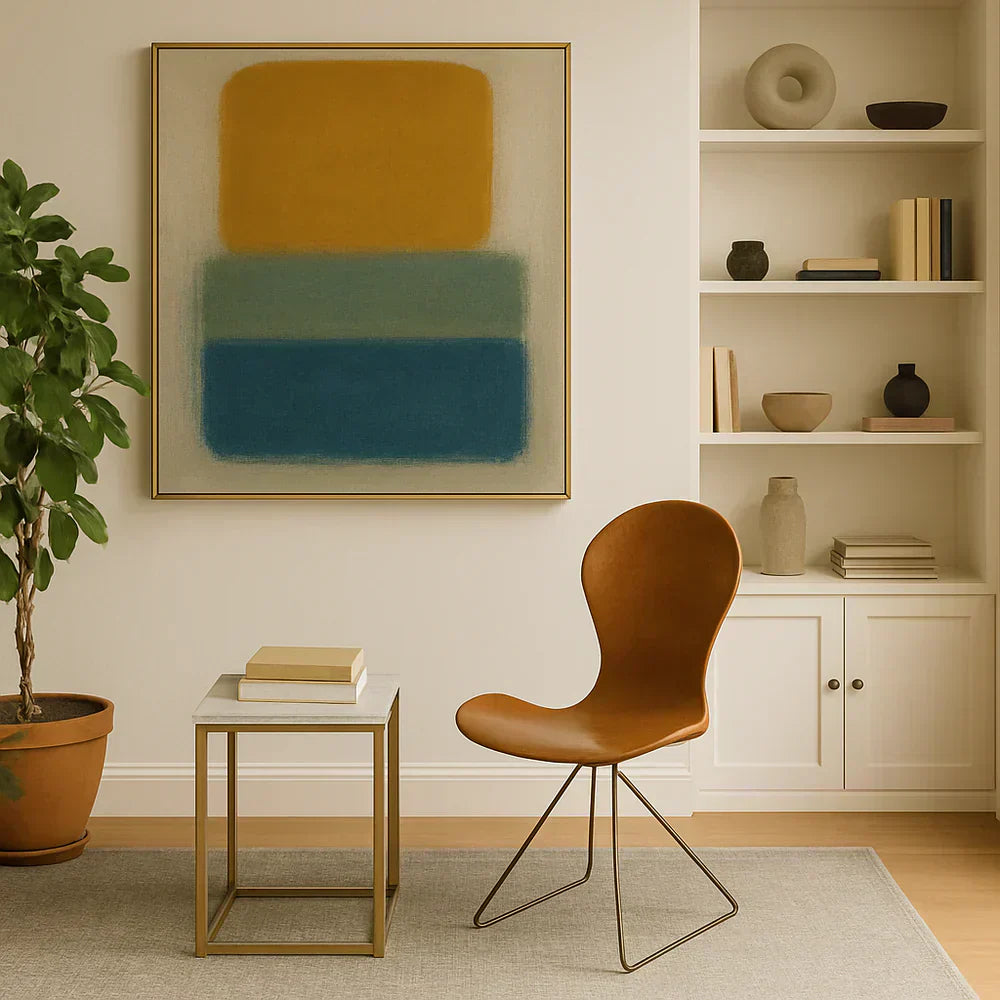
Why Beautiful Rooms Go Unused
Some rooms are designed perfectly.
The proportions are right.
The palette is cohesive.
Every piece feels considered.
And yet—no one sits there.
The chair remains untouched.
The corner stays quiet.
The room exists more as an image than a place.
It looks right.
But it doesn’t live right.
The Difference Between Designed and Lived-In
Design often begins with how something looks.
Where the sofa sits.
How the artwork aligns.
What balances the composition.
But living in a space is different.
We don’t experience rooms as images.
We experience them through movement, habit, and instinct.
Where we sit without thinking.
Where we set things down.
Where we naturally return to.
A room can be visually resolved and still feel disconnected from how we actually use it.
And when that happens, we avoid it.
Why Some Spaces Never Get Used
There’s usually a reason a room goes untouched—and it’s rarely obvious at first glance.
Sometimes, the layout is too rigid.
Furniture is placed for symmetry, not for interaction.
A chair faces outward instead of inward.
A table sits too far to reach.
Pieces exist beside each other, but not with each other.
Other times, the scale is slightly off.
A piece is too small to anchor the space.
Or too large to move around comfortably.
Nothing feels quite right—so nothing invites you in.
And then there’s the absence of a natural focal point.
When nothing leads, your eye doesn’t settle.
And if your eye doesn’t settle, neither do you.

The room looks complete—but nothing is close enough to use.
The Role of Movement and Flow
A room is not static.
It’s something you move through.
You enter.
You pause.
You shift.
And the space should support that movement without effort.
When layout works, you don’t think about it.
You just sit.
When it doesn’t, you hesitate.
That hesitation is subtle—but it changes everything.
You choose another room.
Another seat.
Another place to be.
Where the Room Begins to Work
The shift doesn’t come from adding more.
It comes from understanding how the room wants to be used.
Where people naturally gather.
Where light falls during the day.
Where a conversation might begin.
Then placing pieces in response to that—not just the walls.
A chair angled slightly inward.
A table within reach.
A piece that gives the room direction.
Not by demanding attention,
but by quietly organizing everything around it.

Designing for Living, Not Just Looking
There’s a difference between a room that photographs well
and a room that feels good to be in.
One is composed.
The other is experienced.
The most successful spaces do both—but they begin with how they’re lived.
They allow for imperfection.
They invite use.
They make staying feel natural.
You don’t think about where to sit.
You just do.
The Pieces That Change Everything
Often, it comes down to one decision.
A piece that finally connects the room.
That brings elements into relationship with one another.
That gives the space a sense of purpose.
Not more pieces.
Just the right one—placed in the right way.
A room doesn’t come together all at once.
It’s shaped by the decisions you make —
and the ones you choose not to.
Receive The Noble Edit each week,
and learn how to create spaces that feel natural to live in.
{formbuilder:112316}
Only what works. Nothing extra.
A Room You Actually Use
When a room works, you don’t notice it right away.
You notice it later.
When you’ve been sitting longer than you meant to.
When the space feels easy.
When nothing is asking you to adjust.
That’s when you know.
It’s no longer just designed.
It’s lived in.


Written by ALISON MCCANN

Leave a comment
This site is protected by hCaptcha and the hCaptcha Privacy Policy and Terms of Service apply.