
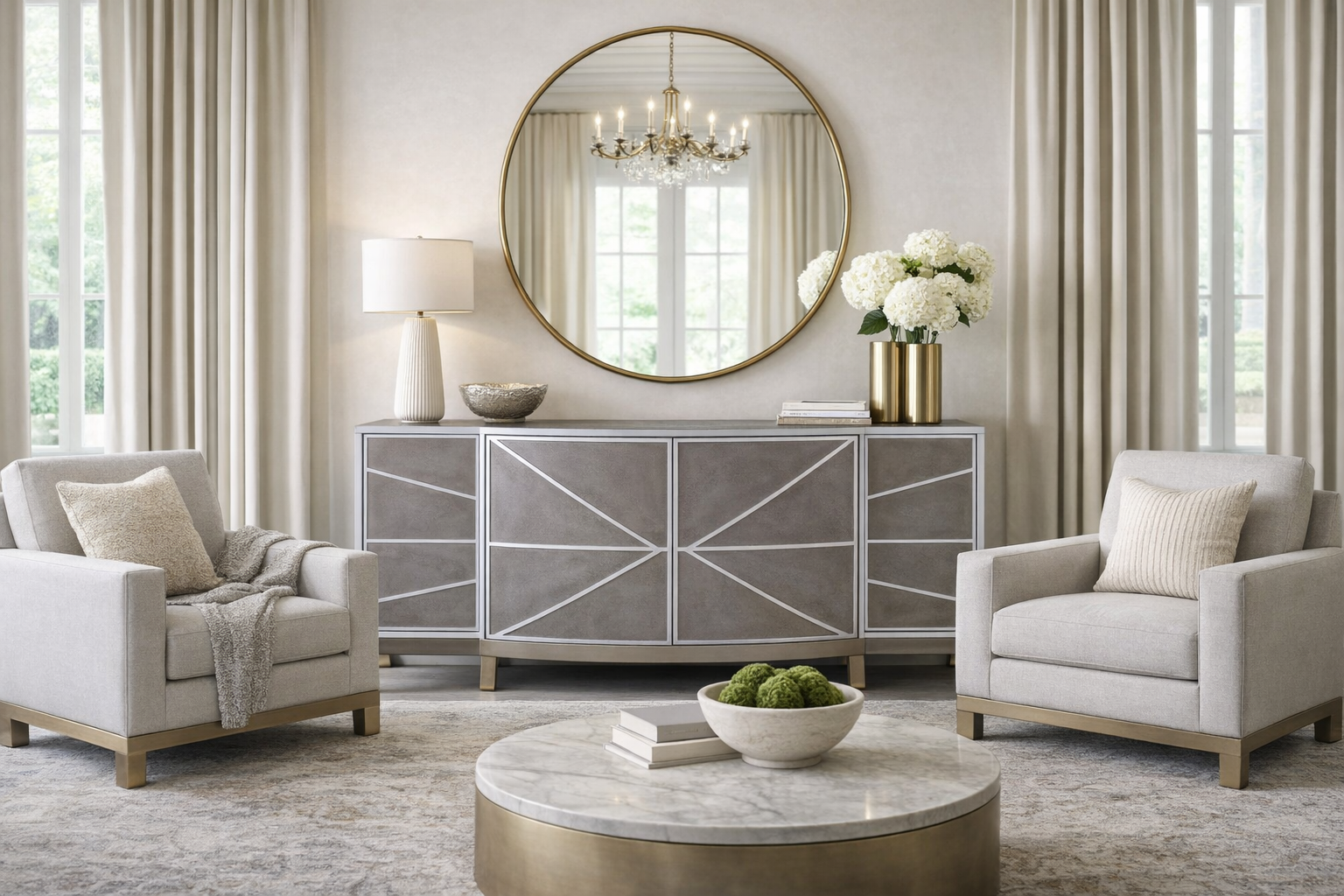
The Piece That Anchors the Room
It’s Rarely the Room
There’s a moment when a space begins to feel complete.
Not because more has been added —
but because something finally holds it together.
Rooms that feel resolved, grounded, and quietly powerful are rarely built through accumulation. They are shaped by intention. And more often than not, they are defined by a single piece that everything else begins to respond to.
It’s rarely the room.
It’s the piece that anchors it.
What It Means to Anchor a Space
An anchored room has a sense of gravity.
Your eye knows where to land.
The space feels balanced, even if it’s minimal.
Nothing feels like it’s floating or competing for attention.
This doesn’t come from symmetry alone or from filling every corner. It comes from one element that carries enough presence — through its scale, material, or silhouette — to ground everything around it.
That piece becomes the reference point.
It sets the tone for how the room is experienced.
The Power of Scale
One of the most common reasons a room feels unfinished is scale.
Pieces that are too small create visual drift.
Nothing feels settled.
An anchoring piece corrects this immediately.
A substantial console along a wall.
A dining table that commands the center of the room.
A bed that feels proportional to the architecture around it.
Scale doesn’t mean oversized — it means appropriate.
When a piece holds its proportion within the room, everything else begins to align naturally.

Material as Presence
Beyond size, material carries weight.
Some materials absorb light.
Others reflect it.
Some feel quiet and textural, while others introduce contrast and depth.
A burl wood console.
A stone coffee table.
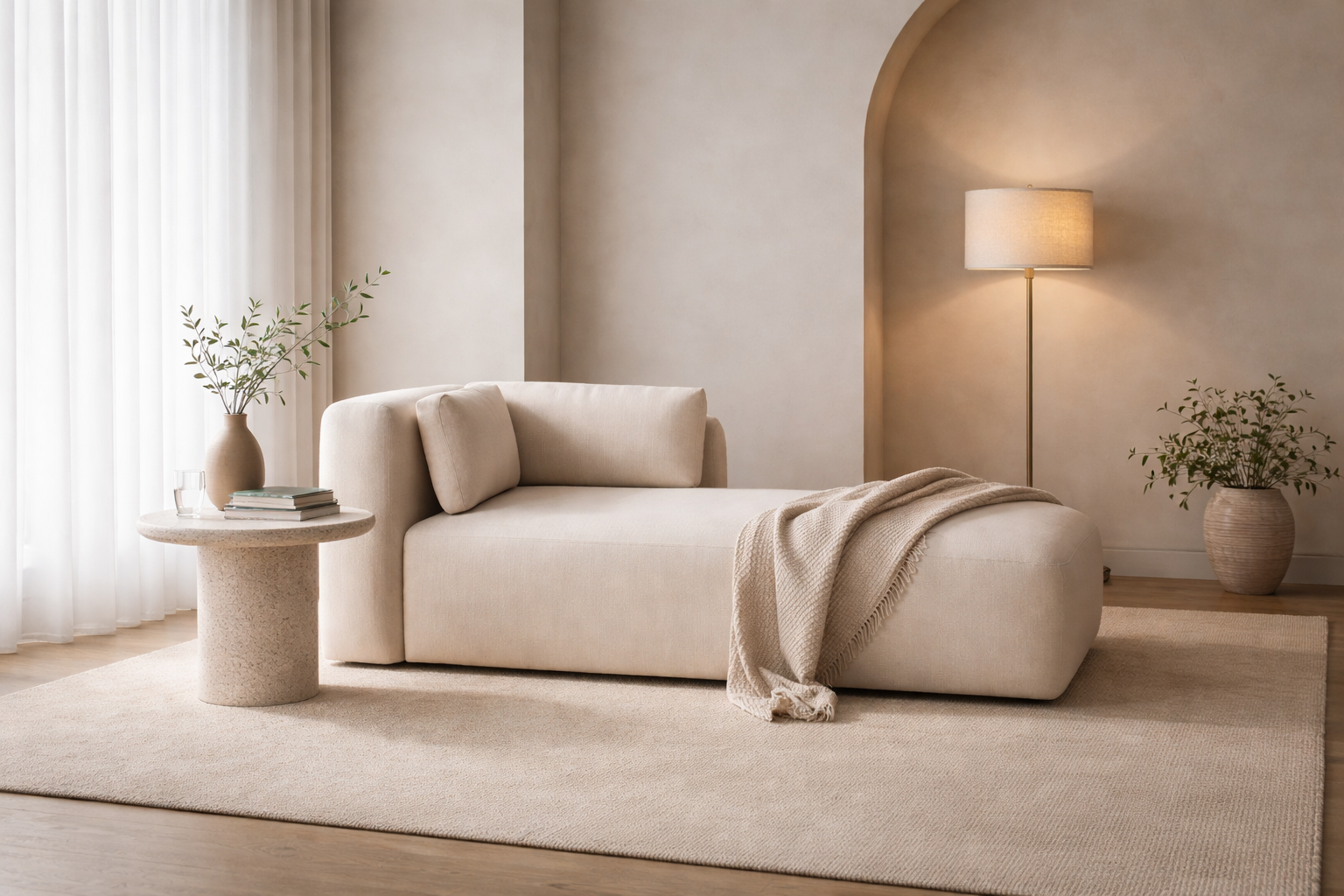
A richly upholstered bench.
These materials don’t need embellishment. Their presence alone is enough to anchor a space.
When materials are intentional, they create a subtle hierarchy — guiding the eye without overwhelming it.

Placement Is Everything
Even the right piece can lose its impact if it isn’t placed with intention.
An anchoring piece should feel:
-
centered
-
considered
-
connected to the architecture
It should not feel like it was “fit in.” It should feel like the room formed around it.
This is where restraint becomes powerful.
Instead of adding more, you allow space around the piece.
Negative space becomes part of the design.
And suddenly, the room feels composed.

The Difference Between Filling and Finishing
Many spaces feel close — but not complete.
This often leads to adding more:
-
more chairs
-
more decor
-
more layers
But completion doesn’t come from addition.
It comes from clarity.
When the right piece is introduced, the need for excess disappears.
The room feels resolved, not because it is full, but because it is balanced.
This is the difference between filling a room and finishing it.
{formbuilder:112316}
Choosing the Right Piece
The piece that anchors your room should feel:
-
Substantial — visually and physically
-
Intentional — not temporary or trend-driven
-
Aligned — with the tone of your space
It doesn’t need to be dramatic.
In fact, the most powerful pieces rarely are.
They feel inevitable — as if they were always meant to be there.

Where to Begin
If a room feels incomplete, resist the urge to add more.
Instead, ask:
-
What is this space missing?
-
Where does the eye not settle?
-
What would give this room weight?
Then begin with one piece.
Let it anchor the space.
Everything else will follow.

Written by ALISON MCCANN

Leave a comment
This site is protected by hCaptcha and the hCaptcha Privacy Policy and Terms of Service apply.