
Mixing Styles Like a Designer: The Art of Layered Living
The most captivating interiors rarely follow a single rulebook. They’re layered, personal, and deeply expressive—blending eras, textures, and aesthetics into a single, cohesive story. Designers know that great spaces are never accidental. They evolve through a series of choices guided by proportion, balance, and intuition.
When mixing design styles, the goal is not to match but to harmonize. A minimalist chair beside an antique sideboard can feel intentional if the materials, tones, or shapes complement each other. A contemporary sofa can pair beautifully with an ornate mirror if their proportions align. True luxury interiors don’t chase uniformity—they celebrate contrast with discipline and restraint.
This is the art of layered interiors—where modern meets traditional, where global influence mingles with classic form, and where personality shines through every piece.
Start with a Foundation
Every mixed-style interior begins with an anchor—a dominant style that sets the tone for the room. Without this base, layering can quickly turn to chaos.
Choose a single aesthetic to establish your foundation. Perhaps it’s a Japandi-inspired sofa in natural linen, grounding the room with soft minimalism. Maybe it’s a Classic walnut dining table that introduces warmth and formality. Or perhaps a Coastal Luxe console in bleached oak sets an airy, modern tone.
Once you’ve established your foundation, build around it with intention. Think of it as composing music: one instrument takes the lead while others accompany it. The goal isn’t to drown the melody—it’s to enhance it.
When defining your foundation, consider scale, tone, and mood. Do you want the space to feel relaxed or architectural? Do you lean toward soft organic forms or structured silhouettes? Answering these questions ensures every addition supports the overarching narrative rather than competing with it.

Build with Common Threads
Mixing styles works when there’s connection—a thread that ties the composition together. Designers achieve this by repeating materials, colors, or shapes across different pieces.
If your coffee table features travertine stone, echo that texture in a lamp base or decorative bowl. If a chair frame introduces soft black, repeat that hue subtly in a cabinet pull or picture frame. These visual echoes create rhythm and prevent disjointedness.
In transitional design, continuity is the secret ingredient. For example, a mid-century modern sideboard with clean lines can coexist beautifully with a neoclassical mirror if they share a similar wood tone or metal finish. A linen sofa feels at home next to a vintage rug if both share an earthy, muted palette.
Even contrast can be a form of unity when handled deliberately. Pair rough with refined—like rustic oak beside polished brass—or geometric with organic—like a marble-topped console beneath an abstract painting. Balance is what makes variety look curated, not chaotic.
For eclectic luxury interiors, the art lies in subtle repetition. It’s what allows global finds, heirloom pieces, and modern designs to exist together harmoniously.

Avoid Visual Chaos
Layering isn’t clutter. The best-designed rooms breathe. Negative space—the pauses between furniture, art, and accessories—is just as important as the objects themselves.
When mixing design styles, edit ruthlessly. Choose fewer, larger accents over many small ones. A sculptural vase, a striking art piece, or a single oversized plant carries more weight than dozens of competing trinkets.
Keep scale consistent. A petite side table beside an oversized sectional can look accidental, while a balanced pairing feels purposeful. If you’re mixing ornate and minimal elements, let each have space to be appreciated.
Texture can also help control visual rhythm. Smooth surfaces like lacquer or glass pair best with nubby fabrics like bouclé or linen. Natural materials—wood, stone, rattan—add organic calm that unifies otherwise contrasting pieces.
Think of the negative space as silence in a song—it allows the melody to shine.
{formbuilder:112316}
Layer with Confidence
Layering isn’t just about furniture—it’s about depth. Designers use layers to tell a story that unfolds gradually: color, texture, lighting, and silhouette all contribute to the narrative.
Start with your foundational furniture, then build outward. Add a rug that defines tone and texture. Introduce lighting that creates mood—perhaps a sculptural chandelier above, balanced by a soft glow from a table lamp below.
Next, bring in art and accessories that bridge your styles. A contemporary painting above a traditional console unites eras. A vintage ceramic bowl atop a modern table creates warmth and intrigue.
The key to layered interiors is patience. Step back often. Observe how pieces interact. If something feels off, it probably is. Move, remove, and refine. Designers rarely get it perfect on the first try—it’s a process of continuous calibration.

A Layered Example
Imagine a living room designed with contrast and cohesion in perfect balance.
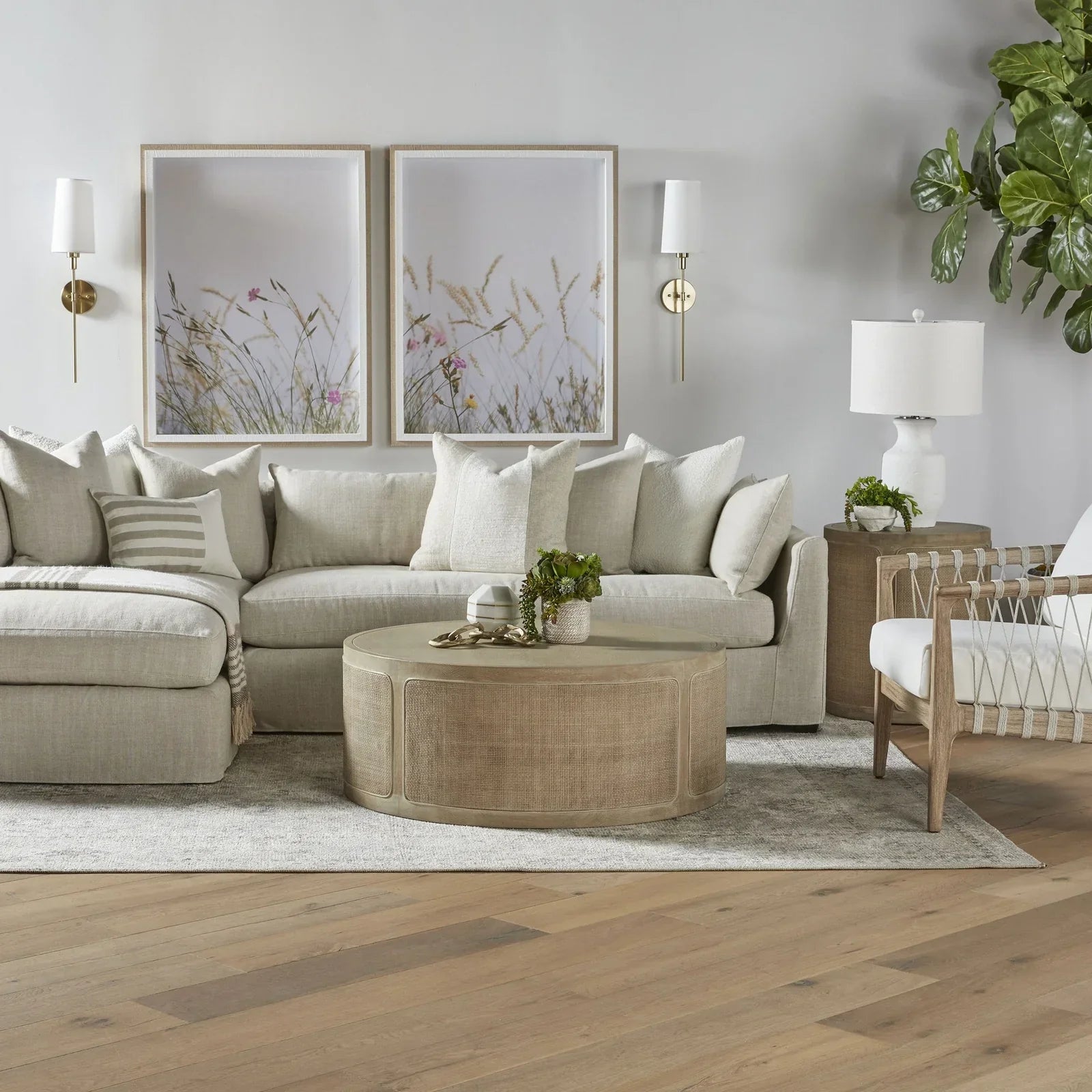
At its heart sits a curved contemporary sofa in ivory bouclé—soft, sculptural, and quietly modern. Across from it, a carved oak credenza adds texture and history. Between them, a sleek marble coffee table bridges the two worlds, grounding the space with a natural material that feels timeless.
The artwork above the credenza blends abstract and organic motifs, pulling tones from both pieces. Bronze accents and textured fabrics add warmth, while a neutral rug anchors the entire scene.
The result? A room that feels designed, not decorated. Each piece contributes to a conversation between eras—one that feels elevated, lived-in, and unmistakably personal.
This balance between modernity and memory, simplicity and ornament, is what defines eclectic luxury interiors. It’s the difference between a room that merely impresses and one that inspires.

Designing Across Time
Mixing styles allows your home to evolve gracefully. Trends come and go, but pieces chosen with intention endure. A transitional design approach—combining the best of traditional craftsmanship with modern restraint—ensures your space stays timeless.
A Louis-style chair beside a minimalist console feels fresh when tied together by color or texture. A vintage chandelier over a contemporary dining table turns contrast into poetry. The magic lies in dialogue, not dominance.
Luxury homes are rarely defined by one era—they’re shaped by layers of taste, travel, and experience. When done well, mixing design styles becomes a visual biography—a record of what you love and how you live.
The Designer’s Mindset
What separates a professional designer from a casual decorator is intention. Designers approach every room as a narrative, balancing opposites with confidence and care.
They know when to stop—when enough contrast becomes tension. They recognize when repetition becomes rhythm. And they understand that emotion is as important as aesthetics.
To design like a professional, approach your home as a collector, not a consumer. Curate, edit, and evolve. Surround yourself with pieces that resonate with meaning, craftsmanship, and joy.
True luxury isn’t about abundance—it’s about alignment.
Final Thought
The art of mixing styles lies in balance: structure and spontaneity, refinement and warmth, minimalism and abundance. A layered interior doesn’t just look beautiful—it feels alive.
When every element has a reason, when materials echo each other and eras converse, your home becomes a reflection of you: confident, curated, and timeless.
The goal isn’t to design a museum—it’s to create a space where life happens beautifully.
✒️ Editor’s Note
Dear Reader,
Design is more than creating beautiful rooms—it’s about shaping how we live, feel, and connect in our spaces. Over these past six months, The Noble Edit has shared insights meant to help you approach your home with intention and confidence.
From maximizing a small studio to embracing biophilic calm, from layering seasonal textures to blending aesthetics gracefully—luxury is never just what you see; it’s what you experience.
At Your Noble Nest, our mission has always been to curate furniture and décor that not only elevate your interiors but enrich your everyday life.
Thank you for letting us be part of your design journey.
With appreciation,
The Noble Edit Team

Written by ALISON MCCANN

Leave a comment
This site is protected by hCaptcha and the hCaptcha Privacy Policy and Terms of Service apply.