
The Rooms That Begin to Hold Your Story
There is a quiet shift that happens in a home over time.
At first, every room feels newly arranged. Pieces are carefully placed. Surfaces are styled. Everything feels intentional, but also a little unfamiliar—like a beautiful space waiting to be lived in.
Then gradually, something changes.
The dining table becomes the place where conversations linger long after dinner. A chair near the window becomes the place where mornings begin. A dresser quietly collects the objects that mark everyday routines.
The room begins to carry the rhythm of the life inside it.
And slowly, it begins to hold your story.
When Design Moves Beyond Decoration
In the early stages of furnishing a home, the focus is often on composition. How elements relate visually. How materials interact. How a space feels balanced.
But over time, decoration becomes less important than meaning.
A room that truly resonates isn’t just beautiful—it becomes familiar. Its pieces develop context through the experiences that unfold around them. Furniture stops being simply furniture. It becomes part of the landscape of daily life.
This transformation is subtle, but powerful. It’s the moment when design moves beyond appearance and begins to support living.

The Role of Furniture in Everyday Rituals
Every home develops its own set of quiet rituals.
Morning coffee placed in the same spot each day. Keys resting on a surface near the door. Books gathering slowly on a side table beside a favorite chair.
These small routines shape how rooms are used, and over time they shape how those rooms feel.
Furniture that supports these rituals tends to become the most valued—not because it draws attention, but because it integrates seamlessly into the rhythms of the household.
A dining table that welcomes both quiet dinners and lively gatherings. A console that becomes the pause between leaving and returning home. A chair that always seems to be the most comfortable place to sit.
These are the pieces that become part of daily life without asking to be noticed.

Why Rooms Feel More Personal Over Time
The most memorable homes are rarely the ones that were completed all at once.
They evolve.
Objects are added slowly. Some are moved. Others are edited away. Over time, what remains is a collection of pieces that feel genuinely connected to the life happening inside the space.
This gradual process creates depth.
Rooms that develop naturally tend to feel more personal because they reflect real decisions rather than quick ones. They show a willingness to live with a space before defining it fully.
In many ways, the passage of time becomes part of the design itself.
{formbuilder:112316}
Creating Spaces That Invite Gathering
Certain rooms have an almost magnetic quality. People naturally gravitate toward them.
Often, this has less to do with decoration and more to do with proportion and placement. When furniture is arranged thoughtfully—allowing conversation, movement, and comfort—rooms become places where people want to linger.
Dining areas are especially powerful in this regard.
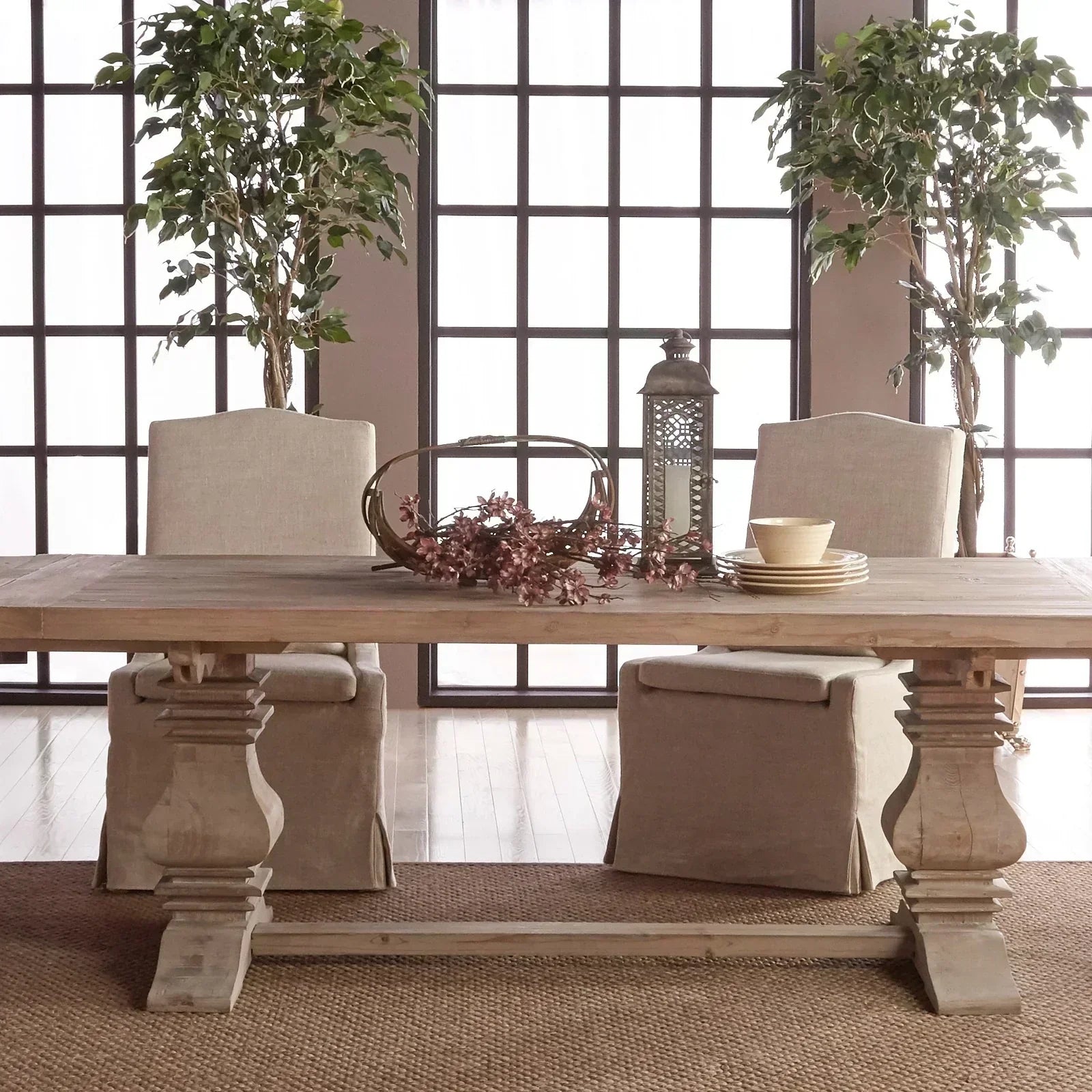
A well-scaled dining table doesn’t just serve meals. It becomes a place where stories are shared, ideas unfold, and everyday life expands into something memorable.
These spaces anchor the social life of a home.

The Beauty of Pieces That Age Gracefully
Furniture that lasts is rarely defined by novelty.
Instead, it’s defined by material integrity, thoughtful craftsmanship, and timeless design. Pieces created with these qualities tend to grow more beautiful over time.
Wood develops patina. Surfaces gain subtle character. Small signs of use become reminders of the life that has unfolded around them.
Rather than feeling worn, these elements make the space feel authentic.
Homes that embrace this perspective often feel richer with age—not because they accumulate more things, but because the pieces they have continue to evolve alongside the people who live with them.
Designing Rooms That Feel Welcoming
One of the most remarkable things about well-designed spaces is how naturally they welcome others.
Guests feel comfortable. Conversations unfold easily. The room seems to invite people to settle in.
This sense of hospitality rarely comes from elaborate styling. More often, it comes from thoughtful scale, comfortable seating, and furnishings that feel grounded and intentional.
Rooms designed with this kind of awareness become the backdrop for meaningful moments.
And over time, those moments become part of the room itself.

The Quiet Legacy of a Well-Lived Home
The longer a home is lived in, the more its rooms begin to hold meaning.
The dining table that has hosted countless conversations. The dresser that quietly marks the start and end of each day. The chair that has witnessed hours of reading, reflection, and rest.
These pieces become familiar companions in the story of a home.
When design allows for this kind of relationship to develop, the space begins to feel deeply rooted—less like a curated environment and more like a living extension of the people inside it.
That is when a home truly begins to feel complete.
Not because it is finished, but because it is alive with memory.
Explore Thoughtfully Designed Furnishings
Discover furniture created to support everyday rituals, meaningful gatherings, and the evolving story of your home.

Written by ALISON MCCANN

Leave a comment
This site is protected by hCaptcha and the hCaptcha Privacy Policy and Terms of Service apply.