
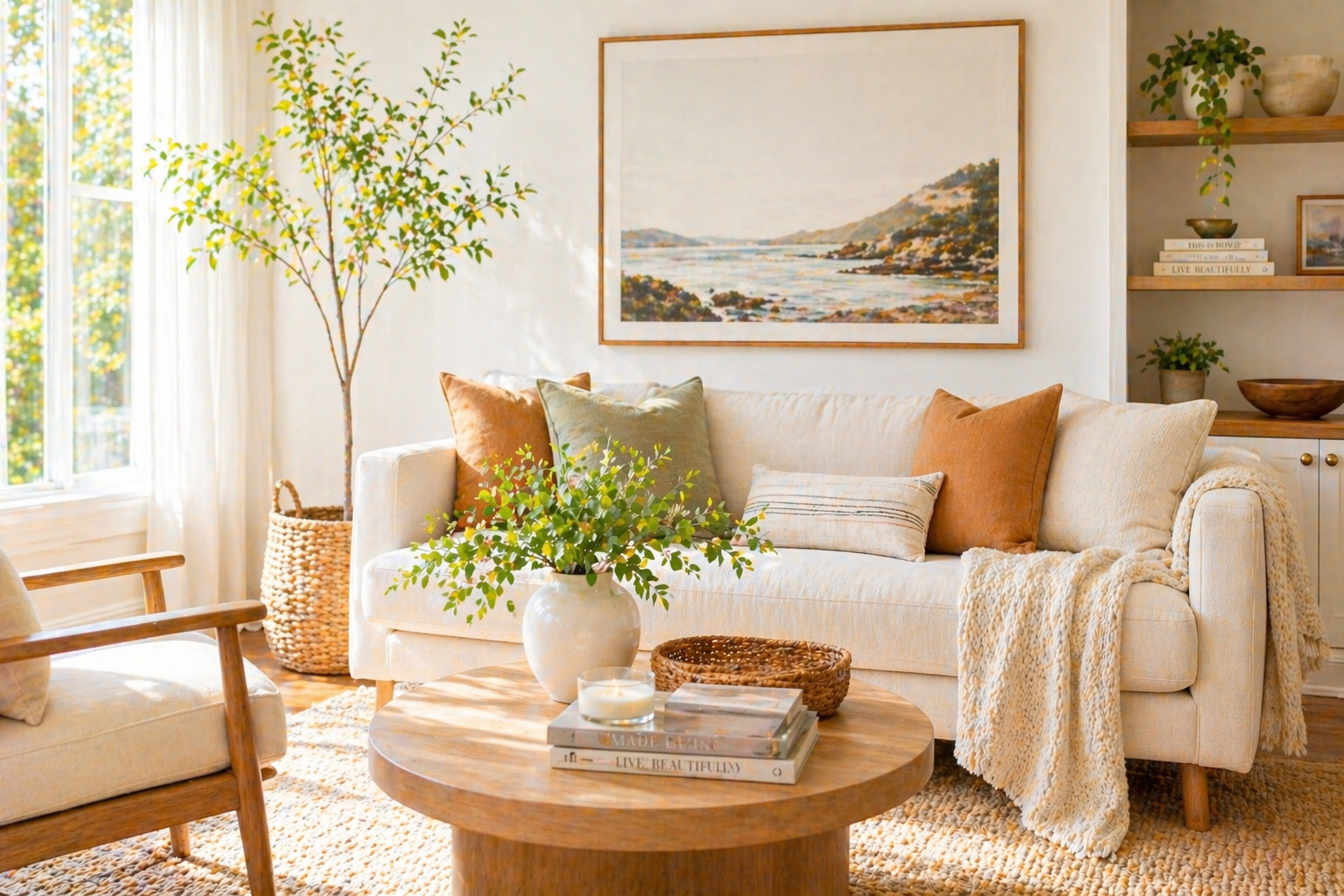
The Living Room Is Where a Home Finally Exhales
There’s a moment that happens after the guests leave.
The dishes are cleared.
The conversations fade into memory.
The house grows quieter.
And suddenly, the living room becomes something entirely different.
Not a place for entertaining.
Not a room meant to impress.
But the space where life softens.
The place where people finally exhale.
For years, living rooms were designed around appearances. Furniture was arranged to look complete, balanced, or polished — often with little thought given to how the space actually felt to live in.
But today, the meaning of the living room is changing.
People are no longer searching only for beautiful spaces.
They’re searching for emotional ones.
Rooms that feel grounding.
Warm.
Comfortable.
Intentional.
Spaces that help them slow down after constantly being pulled in every direction.
And increasingly, the living room has become the emotional reset point of the home.
The Shift Away From “Perfect” Living Rooms
For a long time, many living spaces felt more performative than personal.
Overly styled coffee tables.
Furniture that looked beautiful but felt untouchable.
Rooms designed more for photos than for real living.
But people are beginning to move away from spaces that feel overly curated.
Instead, there’s a growing desire for homes that feel layered, calming, and genuinely lived in.
The kinds of rooms where someone instinctively sinks into the sofa.
Where lighting feels softer.
Where the atmosphere itself creates comfort.
That shift is changing the way people approach furniture entirely.
Because the right living room pieces don’t just complete the aesthetic of a home.
They shape the emotional experience of being inside it.

Why Comfort Has Become a Luxury
Luxury used to mean formality.
Today, true luxury feels entirely different.
It feels restorative.
The most aspirational homes are no longer the ones that feel cold or untouchable.
They’re the homes that create a sense of ease.
Deep seating.
Soft textures.
Warm wood tones.
Natural materials.
Curved silhouettes.
Layered lighting.
The spaces people are drawn to now are the ones that feel emotionally calming the moment they walk in.
That’s why comfort has quietly become one of the defining elements of modern luxury design.
Not comfort in the sense of excess.
But comfort in the sense of emotional relief.
The feeling that a room is allowing you to finally slow down.

The Furniture That Changes the Feeling of a Room
Some furniture simply fills space.
Other pieces define how the room feels.
That difference is often subtle, but people immediately recognize it when they experience it.
A sculptural sectional that naturally draws people in.
A swivel chair positioned beside a soft reading lamp.
A warm wood coffee table that grounds the center of the room.
The most memorable living rooms are rarely overcrowded.
Instead, they’re anchored by a few substantial, intentional pieces that create emotional balance throughout the space.
Furniture becomes more than functional.
It becomes atmospheric.
And often, the strongest rooms are the ones where every piece contributes to the same feeling:
Warmth.
Ease.
Presence.

Designing a Living Room That Feels Intentional
A beautiful living room doesn’t require excess.
In fact, the rooms that feel the most luxurious are often the most restrained.
The goal is not to fill every corner.
The goal is to create an environment that feels cohesive and emotionally grounded.
One of the easiest ways to begin is by focusing on a single anchoring piece.
A substantial sofa.
A sculptural accent chair.
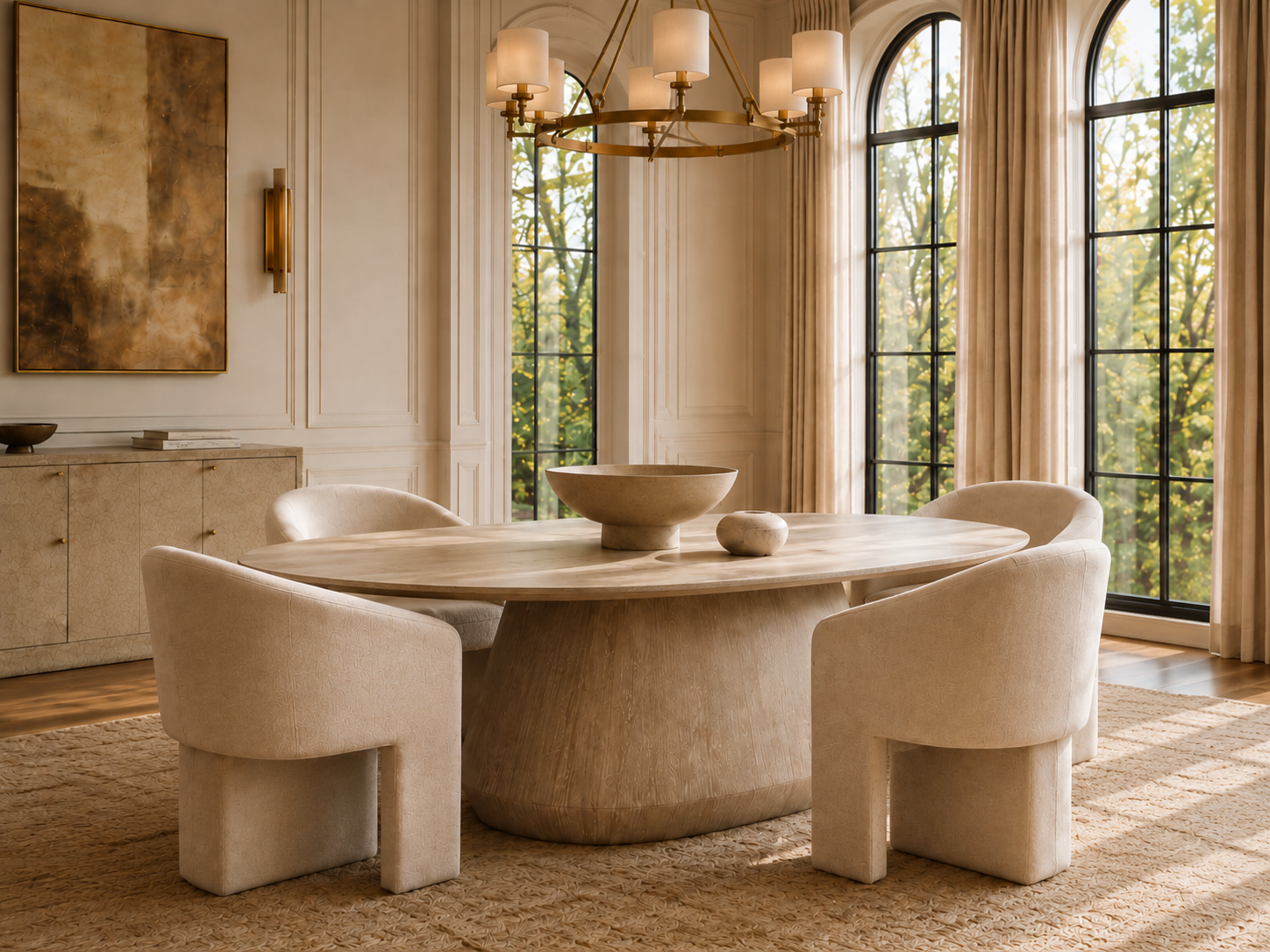
A warm coffee table with architectural presence.
When the foundation of the room feels strong enough, the rest of the space naturally begins to settle around it.
That’s why certain living rooms immediately feel complete.
Not because they contain more.
But because the right pieces are doing more emotionally.
The Return of Softness in Interior Design
Another major shift happening inside modern homes is the return of softness.
For years, interiors leaned heavily minimal.
Sharp lines.
Cool tones.
Sparse styling.
Now, people are gravitating toward spaces that feel warmer and more human.
Curved furniture.
Textured fabrics.
Rounded coffee tables.
Organic shapes.
Earth-driven palettes.
These softer elements change the energy of a room almost instantly.
They create visual calm.
They reduce harshness.
They make spaces feel more inviting.
And perhaps most importantly, they make people want to stay.
That emotional pull is what transforms a living room from visually beautiful into genuinely memorable.

The Living Room as an Emotional Space
The modern living room has become far more than a design category.
It has become a reflection of how people want to live.
Not rushed.
Not overstimulated.
Not constantly moving.
But slower.
More connected.
More intentional.
People want homes that feel restorative now.
And increasingly, the living room is where that feeling begins.
It’s where someone curls up at the end of a long day.
Where conversations continue after dinner.
Where weekends feel slower.
Where the atmosphere of the home becomes most tangible.
That emotional role is changing how people shop for furniture entirely.
The focus is no longer only on matching finishes or trends.
It’s on choosing pieces that create a feeling.
{formbuilder:112316}
Creating Spaces That People Want to Stay In
The most meaningful homes are not necessarily the most expensive ones.
They’re the homes that make people feel something.
A sense of calm.
A sense of comfort.
A sense that they can fully settle into the room around them.
That feeling is rarely accidental.
It’s created intentionally through atmosphere, materiality, and thoughtful design.
And often, it begins in the living room.
Because when a living room feels right, the entire home feels different.
Warmer.
Softer.
More complete.
At Your Noble Nest, we believe furniture should do more than simply fill a space.
It should shape the experience of living inside it.
Explore living room pieces designed to bring warmth, comfort, and intentional luxury into every corner of the home.

Written by ALISON MCCANN


Leave a comment
This site is protected by hCaptcha and the hCaptcha Privacy Policy and Terms of Service apply.