
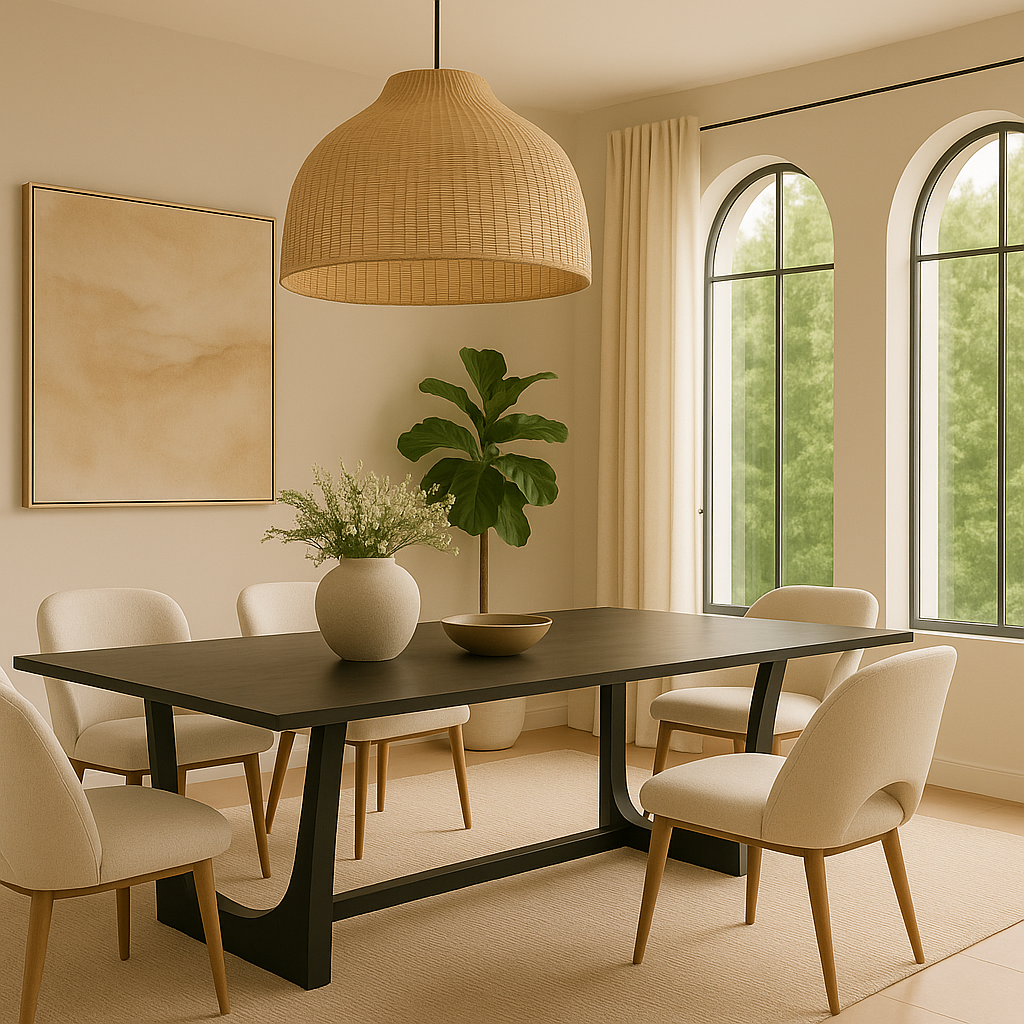
Dining Room Design 101: From Tables to Flow
Dining rooms are where ritual and celebration meet. They deserve more than a functional table and chairs—they deserve a sense of theater balanced with warmth. Whether you’re hosting a grand dinner party or sharing quiet meals with family, the design of your dining room sets the tone for connection and memory.
In luxury interiors, the dining room isn’t merely a space—it’s an experience. Every choice, from the size of the table to the texture of the chairs, contributes to an atmosphere of intention. Done well, it’s a composition of proportion, comfort, and flow—an elegant balance of beauty and ease.
The Table Sets the Stage
In dining room design, the table is always the starting point. It’s both functional and emotional—the piece that brings people together.
Rectangular dining tables convey formality and tradition. They’re ideal for larger gatherings, allowing room for abundant place settings and conversation across long lines. A walnut or oak table grounds the space, while a stone or marble tabletop introduces sculptural luxury.
Round dining tables, on the other hand, create intimacy. Everyone faces one another, encouraging conversation and connection. In smaller or square rooms, round tables also enhance movement and prevent corners from feeling heavy.
Extension tables are the most adaptable choice—ideal for real life. They expand for holidays and celebrations, then contract for everyday living. For luxury dining tables, seek quality craftsmanship and authentic materials that age gracefully: solid woods, metals with patina, or natural stone with unique veining.
No matter the shape, proportion is essential. Allow at least 36 inches between the table edge and the nearest wall or furniture so guests can move comfortably. The right table feels substantial but never oversized—it fits the room and the rhythm of your gatherings.

Chairs That Invite Lingering
The dining experience is only as comfortable as its seating. Great dining chairs disappear beneath conversation, supporting long, effortless meals.
For a truly inviting space, prioritize ergonomics and texture. Upholstered dining chairs in performance linen, velvet, or boucle offer comfort without sacrificing sophistication. Sculptural wooden chairs bring a timeless, architectural quality that suits both contemporary and traditional homes.
In luxury interiors, mixing chair styles adds personality and depth. Pair simple side chairs with two more refined armchairs at each end of the table to create a subtle sense of hierarchy. This approach keeps the setting dynamic while maintaining cohesion through color or material.
Comfort is non-negotiable. Guests should linger comfortably long after dessert. Chairs with gently curved backs, generous proportions, and supportive cushioning signal quiet luxury—the kind that values experience as much as appearance.

Storage That Anchors
No dining room feels complete without a place for storage and display. Sideboards and buffets play this role beautifully—functional yet integral to the room’s design language.
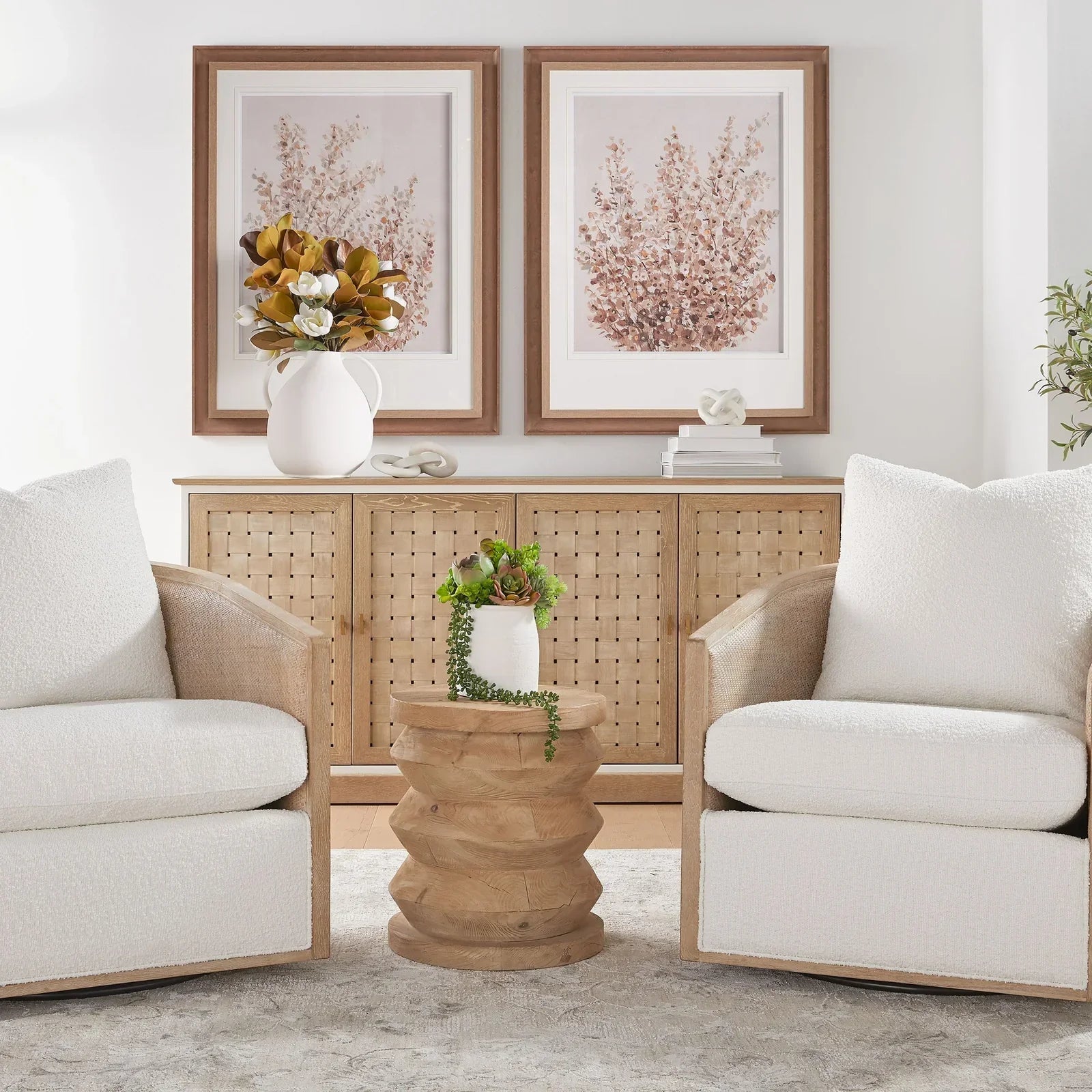
A sideboard serves both practical and aesthetic purposes. It houses serveware, linens, and glassware while offering a stage for display. Candles, sculptural vases, or a large framed mirror above the piece create a sense of vertical balance and visual interest.
In more formal spaces, a substantial sideboard reinforces symmetry and grounds the dining table’s weight. In open-plan homes, it defines the dining zone while offering surface area for décor and serving.
When selecting a sideboard, proportion is key. It should complement, not compete with, your table. As a rule of thumb, a sideboard that’s roughly two-thirds the length of your table maintains balance. Consider matching or contrasting materials—walnut with brass hardware, oak with blackened iron legs—to add sophistication and harmony.
For luxury dining rooms, choose storage that feels permanent—pieces crafted from solid materials with thoughtful detailing. A beautifully made sideboard becomes an heirloom that tells a story, evolving with the home through generations.

The Dining Experience
A beautifully designed dining room feels both intimate and expansive—a place where the energy shifts the moment you walk in.
Picture this: a pale oak dining table surrounded by linen slipcovered chairs. A warm walnut sideboard glows softly beneath a round mirror. Brass candlesticks catch the evening light. The room feels alive but calm—a space where laughter carries easily, and every meal feels intentional.
That’s the heart of luxury dining room design. It’s not about opulence for its own sake—it’s about creating an experience that blends comfort, proportion, and emotion. A successful dining room flows seamlessly from the rest of the home while maintaining its own sense of occasion.
The key is curation. Avoid overcrowding the space. Allow each piece—table, chair, sideboard—to have room to breathe. Keep pathways open so movement feels natural. Let the architecture and materials take the lead, and use décor to emphasize what’s already working.

Materials That Matter
In a luxury dining room, materials tell the story. They set the tone for mood and longevity.
-
Wood: Oak, walnut, and ash lend warmth, texture, and organic richness. These woods age beautifully, gaining depth over time.
-
Stone: Marble and travertine elevate the space with timeless sophistication. Each slab is unique—like artwork carved by nature.
-
Metal: Brass, bronze, or brushed nickel adds a subtle sheen, whether through furniture accents or décor.
-
Fabric: Linen, boucle, and leather bring touchable texture that enhances comfort and softness.
Mixing materials creates contrast and depth. A polished marble table paired with matte linen chairs, or a rustic oak table beneath a sleek metal mirror, feels modern yet timeless. These juxtapositions make the room visually compelling without overwhelming it.
The hallmark of luxury design is authenticity—real materials, honest craftsmanship, and restraint in quantity. It’s better to have three exceptional pieces than ten forgettable ones.
Timeless Design Principles
Every great dining room design follows a few universal truths:
-
Balance: The eye should move comfortably between table, seating, and sideboard.
-
Flow: Keep clear circulation paths for easy movement and conversation.
-
Layering: Combine materials, tones, and décor for dimension.
-
Comfort: Prioritize seating and proportion for an experience that invites lingering.
-
Restraint: In luxury design, the most powerful statement is often simplicity.
A well-designed dining room feels harmonious in every sense. It invites gathering, celebrates craftsmanship, and adapts effortlessly to both formal and casual occasions.
Final Thought
A dining room is more than furniture—it’s a living backdrop for your most meaningful moments. From the quiet of weekday dinners to the laughter of family gatherings, it holds space for connection and memory.
Design yours with intention. Choose a table that feels solid and timeless, chairs that encourage conversation, and a sideboard that anchors the scene with grace. Let your materials speak softly but confidently.
When you combine craftsmanship, proportion, and emotion, your dining room becomes more than a setting—it becomes an experience that lasts long after the plates are cleared.

Written by ALISON MCCANN

Leave a comment
This site is protected by hCaptcha and the hCaptcha Privacy Policy and Terms of Service apply.